Aligning Donor Contribution Cycles with Verification Protocols in Charitable Organizations' Digital Platforms
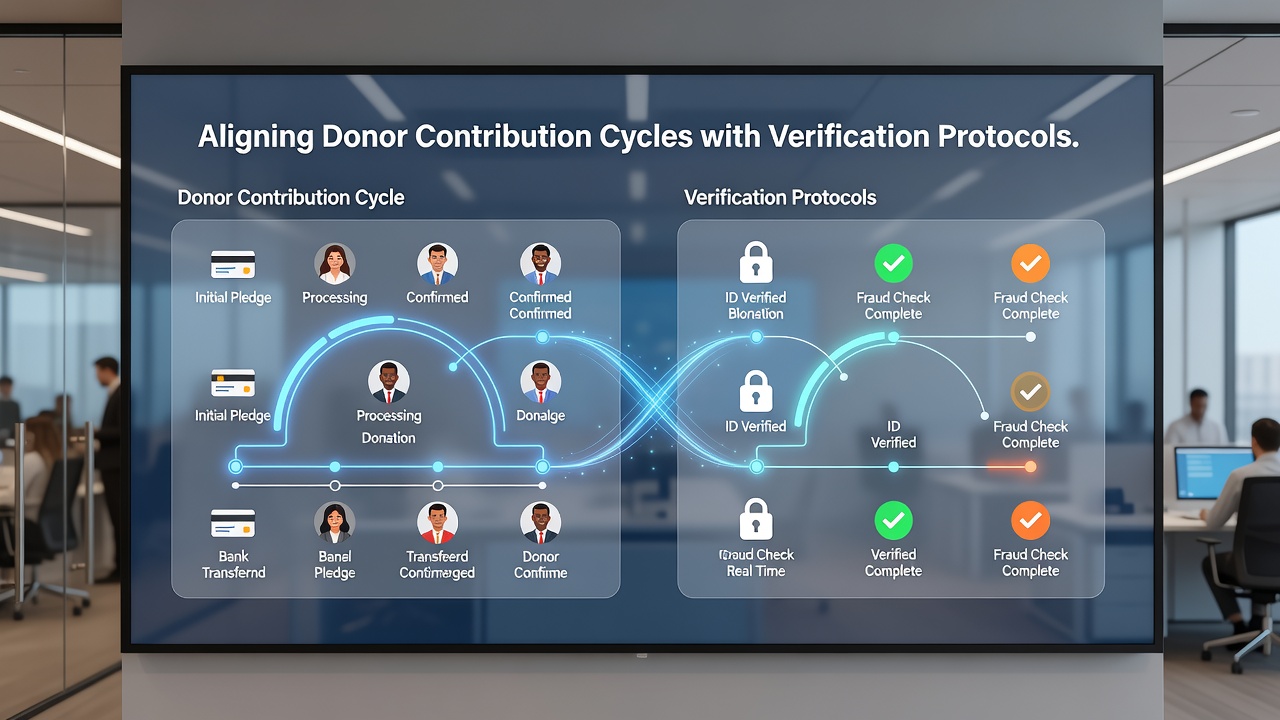
Charitable organizations increasingly rely on digital platforms to manage recurring donor contributions while meeting verification standards required by regulatory frameworks, and this alignment process connects contribution schedules directly to identity confirmation steps, compliance checks, and transaction monitoring systems. Platforms integrate these elements so that donation cycles trigger automated verification sequences at defined intervals, which reduces discrepancies between pledge timing and regulatory reporting deadlines.
Core Components of Donor Contribution Cycles
Contribution cycles in charitable settings typically follow monthly, quarterly, or annual patterns established when donors set up recurring payments through organization websites or mobile applications, and these cycles generate predictable revenue streams that organizations use for program planning. Verification protocols enter the process at cycle initiation and at renewal points because regulations in multiple jurisdictions require ongoing confirmation that donor identities match recorded account details and that funds originate from legitimate sources. Data from the Internal Revenue Service shows that organizations maintaining synchronized systems report fewer filing errors during annual audits compared with those relying on manual reconciliation methods.
Verification Protocols in Digital Environments
Digital platforms employ layered verification that includes document uploads, biometric checks, and cross-references against watch lists at the moment a donor authorizes a recurring contribution, after which the system logs each subsequent cycle event against the original verification record. When cycles align with these protocols, the platform automatically flags any mismatch in account status or donor address changes before processing the next payment, which maintains continuity while satisfying external oversight requirements. Observers note that this integration prevents backlogs that otherwise accumulate when verification occurs separately from contribution processing.
Synchronization Mechanisms Across Platforms
Modern charitable platforms use API connections between payment processors and compliance databases so that each scheduled contribution automatically queries updated verification status, and this linkage allows organizations to adjust cycle dates when regulatory changes occur without disrupting donor agreements. In June 2026 several jurisdictions plan to implement updated digital reporting formats that will require real-time status checks, prompting many organizations to test synchronization routines in advance. The process typically involves mapping cycle milestones to verification triggers, such as re-confirming donor details every twelve months or after any address update, which keeps records current and supports accurate grant reporting.
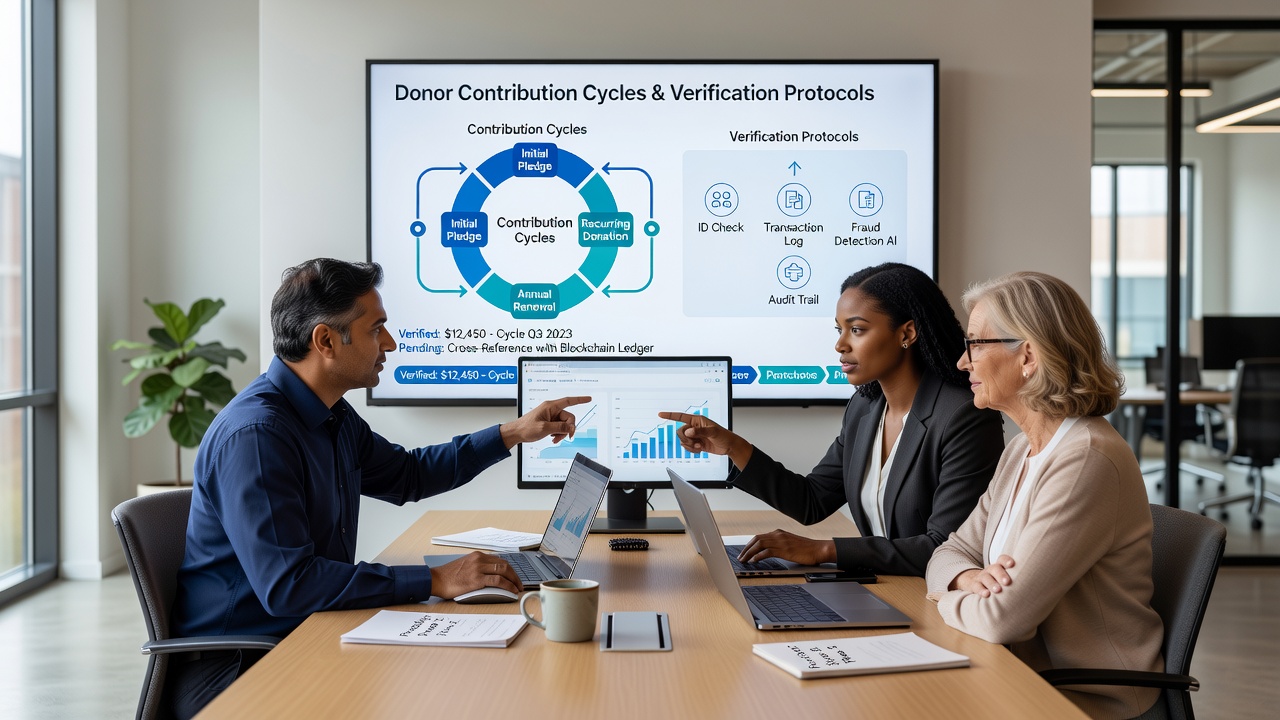
One study conducted by researchers at a Canadian university examined synchronization techniques across multiple non-profit platforms and found that automated alignment reduced processing delays by connecting contribution renewal dates directly to verification refresh intervals. Similar approaches appear in reports from the Australian Charities and Not-for-profits Commission, where organizations that linked these functions demonstrated higher compliance rates during periodic reviews.
Challenges in Maintaining Alignment
Variations in donor behavior create occasional gaps because some contributors pause or alter payment amounts mid-cycle, which then requires the platform to re-initiate verification steps rather than relying on the original record. Technical differences between legacy systems and newer verification tools can also interrupt data flow, forcing staff to intervene manually until updates propagate across connected modules. Organizations address these issues through scheduled system audits that compare cycle logs against verification timestamps, ensuring any divergence triggers corrective action before the next reporting period.
Implementation Examples from Multiple Regions
Charities operating across borders often adopt unified platforms that accommodate differing national requirements, such as combining U.S. tax identification checks with European data protection standards within the same contribution workflow. Take one organization that coordinates seasonal campaigns and uses dynamic cycle adjustments tied to verification completion dates, allowing it to maintain compliance while accommodating regional donation peaks. Another example involves service providers that supply modular verification add-ons to smaller charities, enabling those groups to align cycles without building custom infrastructure from scratch.
Future Developments and Regulatory Shifts
Emerging standards expected around June 2026 emphasize continuous monitoring rather than point-in-time checks, which will push platforms toward predictive alignment models that anticipate verification needs based on cycle length and donor history. Industry reports indicate that organizations investing in these capabilities experience smoother transitions when new rules take effect, because their systems already route contribution events through updated protocol layers. Continued refinement of these connections supports both donor trust and operational efficiency as digital giving volumes grow.
Conclusion
Alignment between donor contribution cycles and verification protocols forms a foundational element of compliant digital operations for charitable organizations, and the mechanisms described above illustrate how platforms achieve this coordination through integrated scheduling and automated checks. Evidence from regulatory bodies and academic studies confirms that synchronized approaches support accurate reporting across jurisdictions while accommodating the natural rhythms of recurring giving. As platforms evolve to meet upcoming requirements, the focus remains on maintaining precise linkages that keep contribution flows and verification records in step.