Building Repeat Customer Programs Using Insights From Credit Card Transaction Histories in Local Shops

Local shops collect detailed credit card transaction histories that reveal purchase frequencies, average spend amounts, and seasonal timing patterns, and these records form the foundation for targeted repeat customer programs. Retail operators examine aggregated data points such as item categories bought together and intervals between visits to identify segments of customers who return at predictable rates. In July 2026 many neighborhood retailers began applying these insights to design offers that align with observed behaviors rather than generic promotions.
Extracting Patterns From Transaction Records
Transaction histories contain timestamps, merchant category codes, and authorization amounts that researchers at institutions like the Federal Reserve Bank of New York have studied to map consumer routines across urban and suburban locations. Analysts group records by recurring identifiers such as the same card used on similar weekdays or for comparable basket totals, which allows segmentation into groups that demonstrate steady loyalty versus those showing declining activity. This process relies on software that processes batches of anonymized data while maintaining compliance with payment network rules.
Shops that apply these methods often notice clusters where customers purchase staple items every two weeks or add discretionary products during specific months, and such observations guide the timing of follow-up communications. Data from the Australian Bureau of Statistics shows similar periodic patterns in small retail environments, confirming that timing signals appear consistently across different markets.
Structuring Loyalty Initiatives Around Observed Behaviors
Repeat programs built on transaction insights typically include tiered rewards that escalate based on documented visit counts or cumulative spend tracked through the same card networks. Operators set thresholds using historical averages so that offers activate only after a customer meets criteria already demonstrated in prior records. This approach reduces waste on incentives that do not match actual habits.
One bakery in a mid-sized city used purchase interval data to send digital coupons for bread and pastries exactly one day before the typical return window, resulting in measurable upticks in repeat visits tracked through the same payment instruments. Another example involves a hardware store that identified customers buying seasonal supplies in spring and offered targeted reminders the following year based on those earlier transaction dates.
Integrating Data Tools With Existing Shop Systems
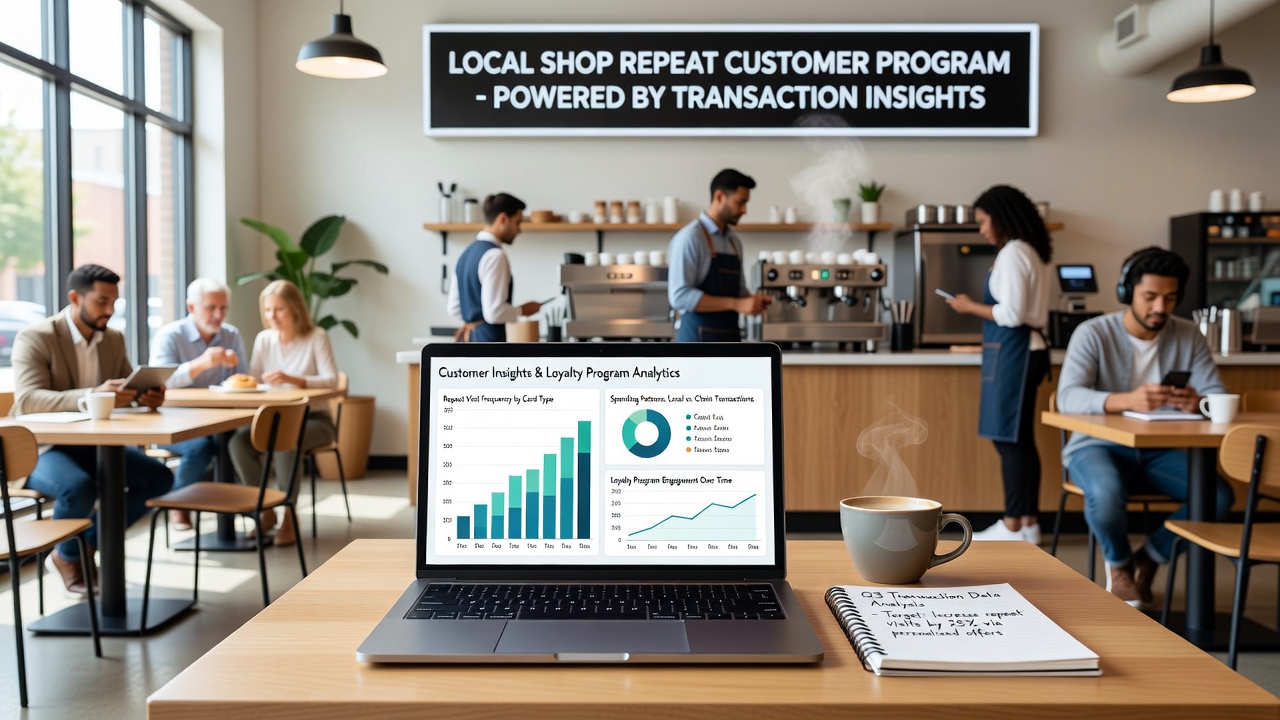
Point-of-sale terminals already capture the necessary transaction details, so many local operators connect these systems to simple analytics platforms that generate customer profiles without requiring new hardware investments. Staff receive dashboards that highlight individuals whose spending has dropped below previous levels, prompting direct outreach through email or app notifications tied to the original card data. Integration remains straightforward because the underlying payment processors supply standardized reports that feed directly into loyalty software.
Small chains have reported success by combining transaction histories with basic inventory records to suggest complementary products that match past baskets, and this method keeps offers relevant without broad advertising campaigns. Privacy regulations require shops to obtain explicit consent before linking individual cards to ongoing programs, which most operators handle at the initial checkout when customers enroll.
Measuring Results and Adjusting Programs
Program effectiveness appears in metrics such as increased repeat visit frequency and higher average transaction values drawn from the same card histories used to build the initiatives. Retailers compare pre-program baselines against post-implementation figures collected over successive quarters to determine which segments respond most strongly. Adjustments follow directly from these comparisons, for instance by shifting reward thresholds when data shows certain groups reach higher spend levels than initially projected.
Industry reports from the National Retail Federation indicate that shops relying on transaction-derived segmentation achieve more consistent retention rates than those using uniform discount structures across all customers. The process remains iterative because new transaction records continuously update the profiles and allow refinement of offer parameters.
Conclusion
Transaction histories provide local shops with concrete evidence of customer routines that support the creation of repeat programs grounded in actual behavior rather than assumptions. By processing these records through compliant tools and aligning incentives with documented patterns, operators can track engagement through the same payment channels while respecting regulatory boundaries. The approach continues to evolve as more retailers adopt analytics that draw directly from the data already generated at checkout.