Coordinating Irregular Remittances for Independent Artists Across Festival-Based Sales Networks
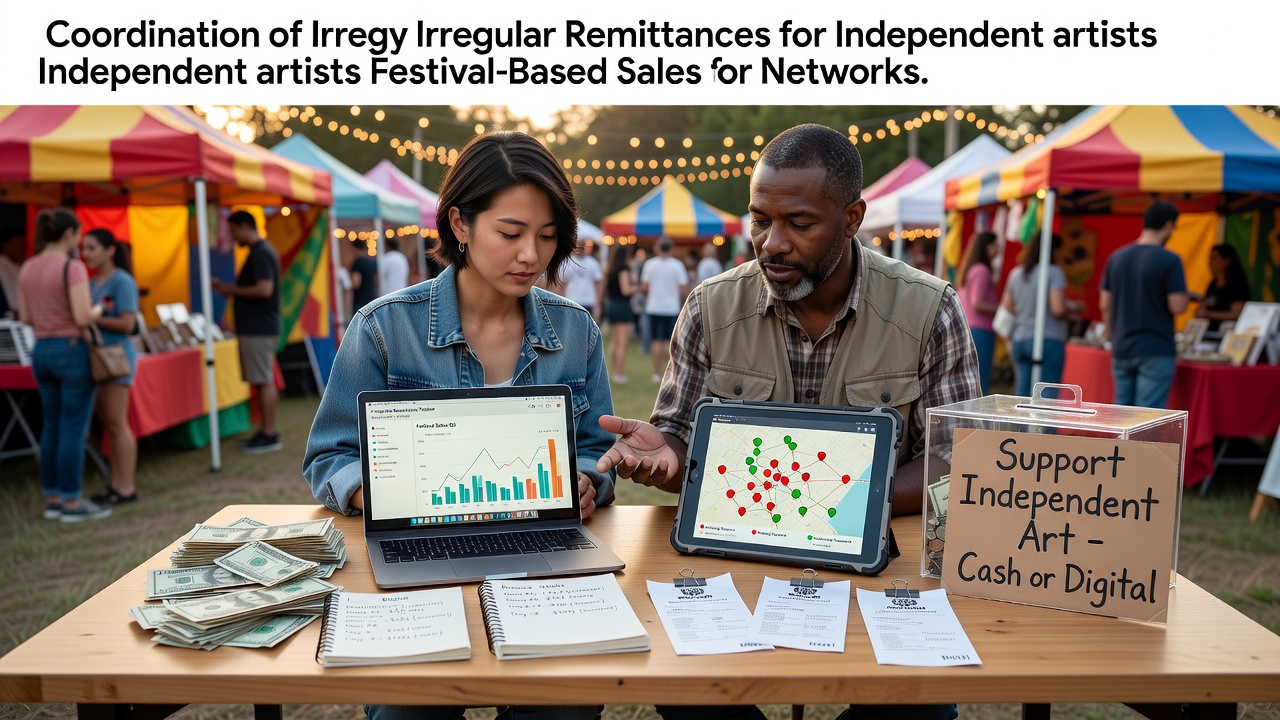
Festival circuits create distinctive cash flow patterns for independent artists who move between events selling work directly to audiences, and the timing of those inflows rarely aligns with fixed schedules. Networks that link multiple festivals handle the collection of sales data from on-site transactions then route funds back to creators through consolidated channels that account for varying event dates and vendor agreements.
Structure of Festival Sales Networks
Independent artists often participate in circuits where organizers maintain shared platforms to record daily sales totals from booths and pop-up stands, while separate clearing entities aggregate those figures before distributing net amounts after agreed deductions. Data shows that such arrangements reduce the number of individual transfers an artist receives across a season, since one network node can consolidate remittances from several events held weeks apart.
Observers note that festival operators in North America and Europe frequently rely on standardized reporting templates supplied by trade associations, which allows inventory updates from mobile apps at each site to feed directly into a central ledger. This linkage supports accurate reconciliation when artists ship additional stock between festivals or adjust pricing based on local demand signals.
Handling Timing Variations in Artist Payments
Remittances arrive irregularly because festival settlement cycles depend on final attendance counts and post-event audits, yet artists require predictable access to funds for travel and material replenishment. Networks address this by offering interim advances drawn against verified sales data once a threshold percentage of transactions clears, with final adjustments issued after all disputes resolve.
What's interesting is how some circuits incorporate weather or attendance contingencies into their distribution formulas, so that an artist whose July 2026 appearances coincide with regional transport disruptions still receives prorated support drawn from pooled reserves maintained by the network. Those reserves accumulate small percentages held back from every sale across the season rather than charging per-artist fees.
Integration of Inventory and Sales Data
Artists who travel with limited editions or handmade items benefit when point-of-sale devices at each festival sync stock counts to a shared cloud record, preventing overselling when the same pieces appear at consecutive events. Research from regional arts councils indicates that networks adopting real-time inventory links experience fewer chargebacks tied to unavailable merchandise, because authorization requests pause automatically once a listed item reaches zero.
One study of multi-venue circuits found that artists using these synchronized systems reported settlement statements that matched their own booth logs within 2 percent variance, compared with wider gaps when manual spreadsheets served as the sole record. The same networks often embed export tools that convert festival-specific sales into formats accepted by national tax authorities, simplifying year-end reporting for creators who operate across borders.

Cross-Border and Multi-Venue Considerations
Artists based outside the host country face added layers when currency conversion and withholding requirements apply to each festival payout. Networks that operate across the EU and Canada coordinate with local fiscal agents so that a single remittance file lists gross sales, applicable taxes, and net transfers in the artist's preferred currency, reducing the need for separate banking steps at every border.
According to figures released by the Australian Festival Association, circuits that adopted unified clearing protocols in recent seasons cut the average number of international wire transfers per artist from eight to three, while maintaining compliance documentation that satisfies both source and destination regulators. Similar patterns appear in reports compiled by Canadian heritage agencies tracking touring visual artists.
Security and Verification Layers
Verification steps embedded in the network workflow confirm artist identity and booth assignment before any funds release, yet these checks occur once per season rather than per event. This approach allows artists to update banking details centrally and have changes propagate to all upcoming festivals without repeated submissions at each site.
Turns out the same verification records also support dispute resolution when a buyer later contests a purchase, because the network retains timestamped sales data alongside the artist's confirmed presence at the relevant festival. Such retention periods typically span the standard consumer protection window in each jurisdiction where the circuit operates.
Conclusion
Coordinating irregular remittances across festival networks ultimately rests on consistent data flows between on-site sales tools, central clearing entities, and artist-facing dashboards that surface projected and actual distributions. As circuits expand their reach into new regions during 2026, the emphasis remains on aligning settlement timing with artists' operational needs while satisfying regulatory demands in multiple countries. Those who manage these networks continue refining the balance between advance mechanisms, inventory accuracy, and consolidated reporting so that independent creators receive funds without excessive fragmentation.