Correlating Authorization Events with Product Availability Updates Across Global Payment Networks
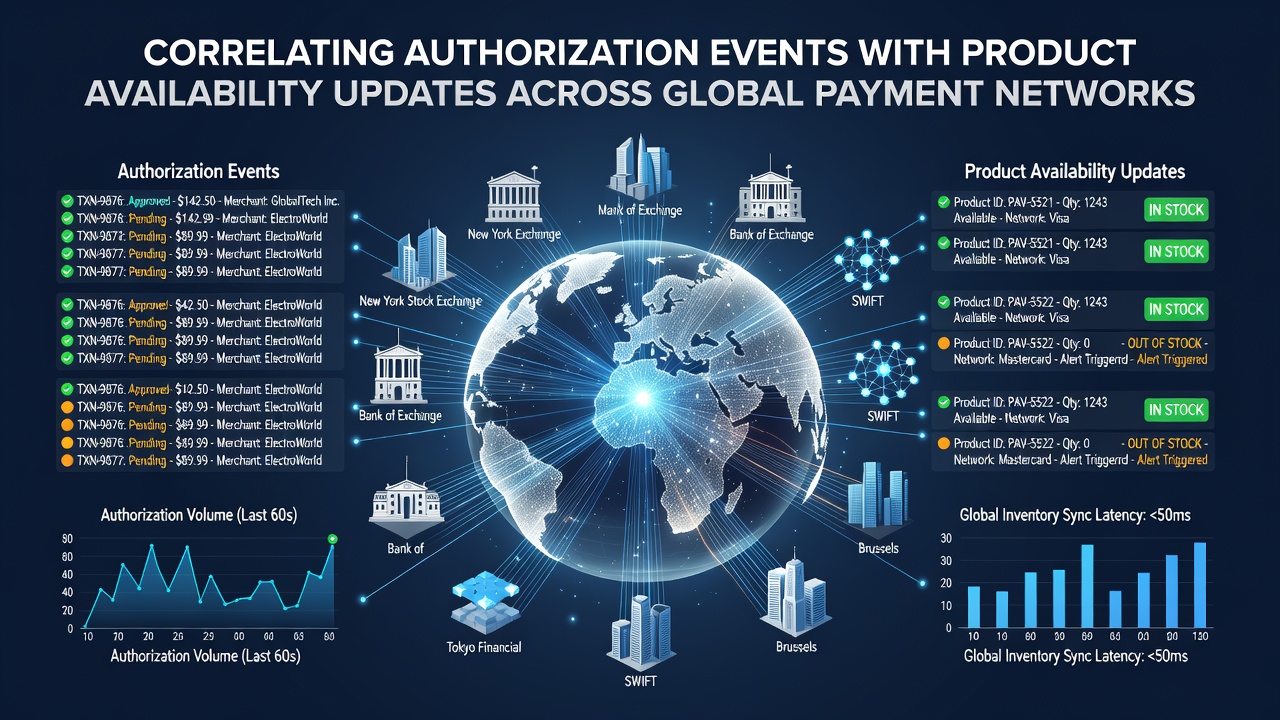
Payment networks process authorization events that reserve funds while merchants simultaneously track product availability through inventory systems, and these two streams of data interact across borders in ways that affect transaction success rates. Global operators rely on synchronized updates because an authorization hold placed on a card can coincide with stock level changes in warehouses located thousands of miles away. Observers note that mismatches between these events lead to declined transactions or oversold items when timing lags occur.
Authorization events begin when a merchant submits a request through acquirer processors to card networks such as Visa or Mastercard, and the issuer responds with an approval code that places a temporary hold on the account. At the same time product availability data moves through supply chain platforms that feed into point-of-sale terminals and e-commerce backends. Researchers at institutions including the Bank for International Settlements have examined how these parallel processes converge, particularly when currency conversion and cross-border routing add extra milliseconds to each step.
Mechanics of Event Correlation
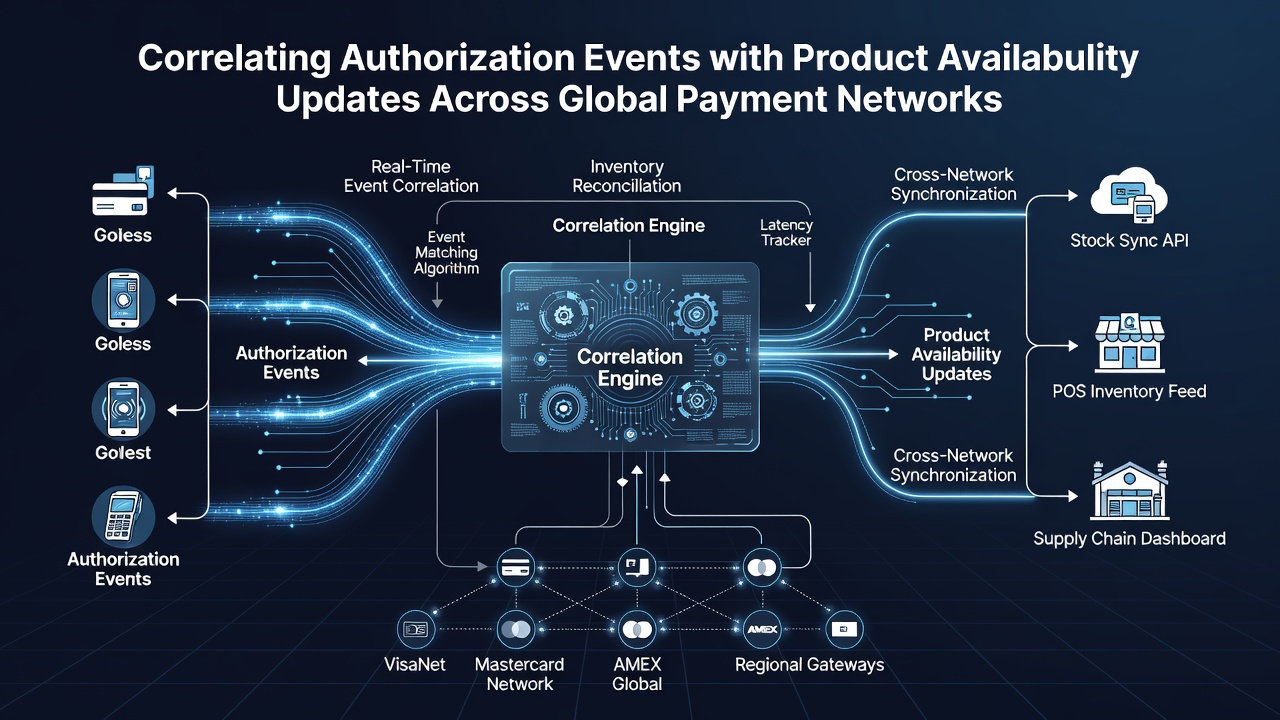
Systems achieve correlation through standardized message formats that embed inventory identifiers alongside authorization fields, allowing gateways to cross-reference stock quantities before finalizing a hold. When a customer places an order the terminal checks available units, then sends an authorization request tagged with that quantity, so the network can flag potential discrepancies if the same item appears in simultaneous requests from different regions. Data from the Federal Reserve indicates that such tagging reduced authorization reversals by measurable margins in high-volume corridors during 2025 testing phases.
Real-time APIs push availability updates from enterprise resource planning software directly into payment orchestration layers, and these feeds operate on sub-second intervals to match the speed of authorization responses. A warehouse in Singapore reporting a stock drop triggers an immediate broadcast that reaches processors in Europe and North America within the same window used for card validation. And when networks implement these bidirectional links, merchants experience fewer instances where funds are held against items no longer listed as available.
Global Network Considerations
Regional variations in clearing times create additional layers of complexity because an authorization approved in one time zone may reach settlement after inventory systems in another zone have already adjusted for new shipments. European networks using TARGET2 protocols handle these offsets differently from those routed through Australian or Canadian switches, yet all must reconcile the same core data points of authorization codes and stock counts. In June 2026 several major networks introduced enhanced timestamp fields that record both authorization initiation and inventory snapshot moments, giving operators clearer audit trails for dispute resolution.
Take one logistics coordinator who manages seasonal goods across multiple continents, and the challenge becomes matching a single authorization event against fluctuating availability that changes with customs clearances and port delays. The coordinator's platform receives confirmation that funds are reserved while simultaneously pulling updated stock levels, then decides whether to release the hold or proceed to capture based on that combined view. Such workflows now rely on shared ledgers that store both payment status and availability flags in unified records.
Technical Integration Approaches
Developers build integration layers that translate ISO 8583 authorization messages into inventory management commands, and these layers sit between acquirers and merchant databases. When an authorization receives a decline code because stock has dropped below the requested quantity, the system automatically triggers a backorder notification without requiring separate manual checks. Studies from academic centers focused on financial technology show that such automated handoffs cut processing overhead in multi-channel retail environments.
Encryption standards protect the combined data streams so that sensitive card details travel alongside proprietary inventory figures without exposing either set to interception. Tokenization replaces actual account numbers while preserving the linkage to specific product SKUs, which lets networks verify availability even when full card data never leaves the issuer's environment. Observers tracking adoption rates report steady growth in these tokenized correlation methods across Asia-Pacific and Latin American corridors.
Operational Outcomes and Monitoring
Merchants monitor correlation success through dashboards that display authorization approval percentages next to real-time stock accuracy metrics, revealing patterns that emerge only when both datasets sit side by side. A spike in partial shipments often traces back to authorization events that cleared before inventory systems finished updating after a bulk return. Continuous reconciliation processes run in the background and flag any divergence exceeding predefined thresholds, prompting immediate review by operations teams.
Regulatory bodies in various jurisdictions encourage these practices because accurate correlation supports consumer protection rules around timely order fulfillment. When availability updates lag behind authorization holds, customers may see charges against unavailable goods, prompting complaints that reach oversight agencies. Networks therefore invest in monitoring tools that surface timing gaps before they affect end users.
Conclusion
Correlation between authorization events and product availability updates continues to shape how global payment networks handle volume growth and geographic spread. As timestamp precision improves and API connections tighten, the two data streams align more closely, reducing friction for merchants who operate across multiple markets. The mechanisms described rely on established protocols and ongoing refinements rather than entirely new inventions, yet their combined effect produces measurable gains in transaction reliability and inventory accuracy.