Exploring Data Flows Between Client Portals and Financial Clearing Systems in Subscription-Driven Service Models
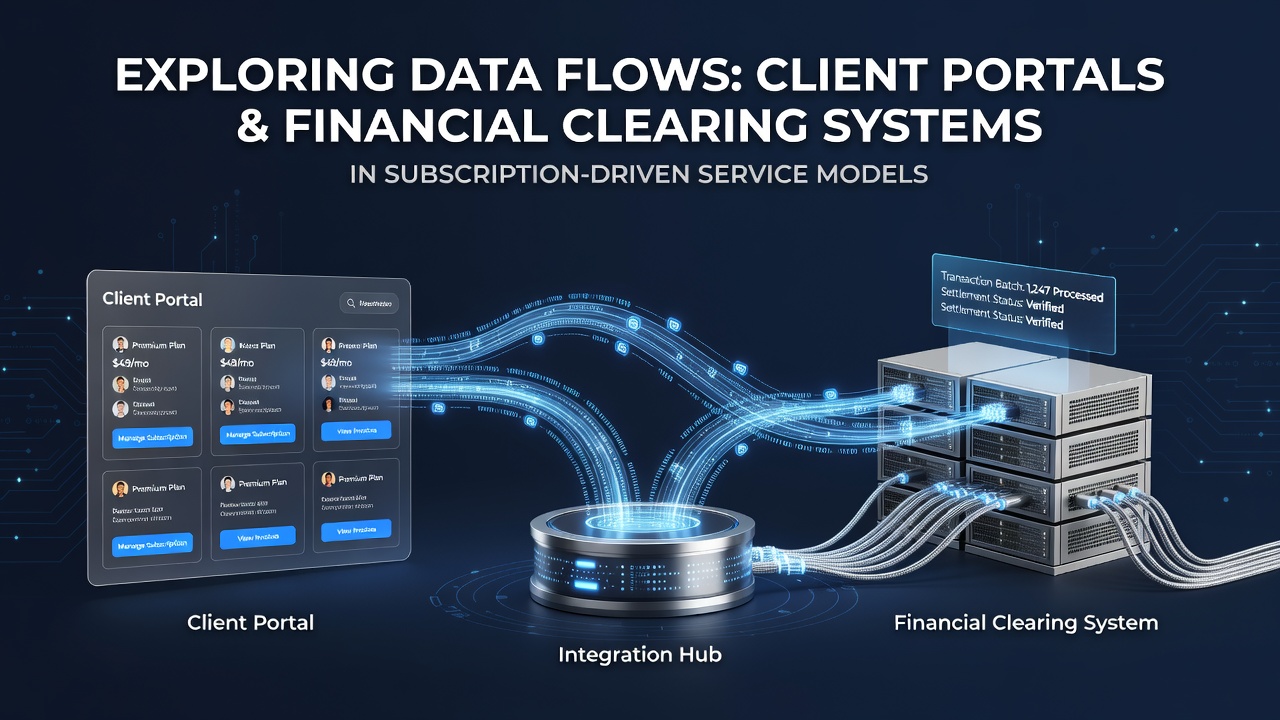
Client portals in subscription-driven service models serve as the primary interface where users manage accounts, review billing details, and update service preferences, while financial clearing systems handle the backend processing of transactions, reconciliations, and fund movements between parties. Data flows between these two components involve structured exchanges of customer records, subscription status updates, invoice details, and settlement confirmations that keep operations aligned across platforms.
Core Components of Data Exchange
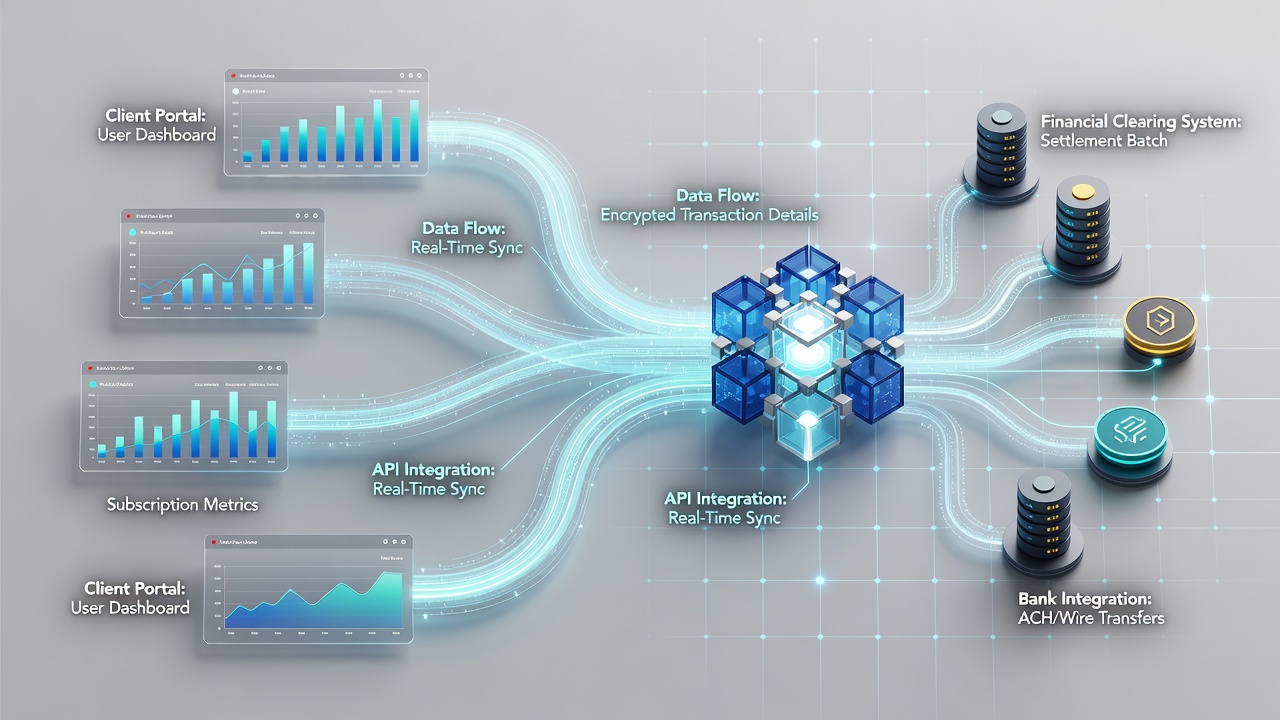
Client portals collect user inputs such as payment method changes, subscription tier selections, and contact information, then transmit these elements through secure channels to clearing systems that validate and process them against account ledgers. Clearing systems in turn send back data on transaction outcomes, balance adjustments, and compliance flags that portals display to users in real time or near real time. Researchers at institutions like the University of Toronto have documented how these bidirectional streams rely on standardized message formats that reduce mismatches during high-volume periods.
Subscription models generate recurring data events that include renewal notifications, usage-based adjustments, and cancellation records, each requiring precise routing to avoid discrepancies in financial records. Clearing networks receive these inputs, apply rules for authorization and netting, then return confirmation payloads that update portal dashboards and trigger customer communications.
Technical Protocols Supporting Continuous Synchronization
Application programming interfaces form the backbone of these connections, allowing portals to push structured queries and receive formatted responses without manual intervention. Protocols such as ISO 20022 have gained adoption in multiple regions because they embed rich metadata fields that carry subscription-specific details alongside traditional payment instructions. In July 2026, several clearing networks in the Asia-Pacific region completed phased migrations to enhanced versions of these standards, which improved the granularity of data attached to recurring service charges.
Batch processing remains common for end-of-day reconciliations where large volumes of subscription events are aggregated before transmission, whereas real-time streams handle immediate actions like instant upgrades or downgrades. Observers note that hybrid approaches, combining both methods, appear frequently in service environments that must balance speed with accuracy across global user bases.
Security and Compliance Layers in Data Transmission
Encryption standards protect data in transit between portals and clearing systems, while access controls limit which internal teams can view sensitive fields such as account identifiers or billing histories. Regulatory frameworks in the European Union require detailed audit trails for every data packet exchanged in subscription billing cycles, a requirement that has prompted service operators to implement logging mechanisms that record timestamps, sender identifiers, and payload checksums. Similar expectations exist under Canadian guidelines administered by the Office of the Superintendent of Financial Institutions, which emphasize traceability for cross-border subscription revenues.
One operator managing multi-region subscriptions reported that mapping each data element to specific regulatory categories reduced the time needed to generate compliance reports by integrating portal logs directly with clearing system outputs. These practices align with broader industry efforts to maintain consistent data lineage across distributed financial infrastructures.
Reconciliation and Error Handling Mechanisms
Discrepancies arise when portal records of subscription changes diverge from clearing system settlement results, often due to timing differences or incomplete metadata. Automated reconciliation tools compare incoming and outgoing data sets, flag unmatched entries, and route them for manual review by operations teams. Clearing houses publish daily reports that service providers import into their portal analytics modules to verify that all recurring charges have settled correctly.
Studies from research groups at the Australian National University have examined how exception queues in these systems process failed transmissions, revealing that subscription models with variable pricing structures encounter higher rates of metadata mismatches than fixed-fee arrangements. Service providers address this by embedding validation rules at the portal level before data leaves for the clearing network.
Conclusion
Data flows between client portals and financial clearing systems underpin the operational integrity of subscription-driven service models by ensuring that user actions translate accurately into financial outcomes. Continued refinements in message standards and synchronization protocols support the expanding scale of these exchanges across different regulatory environments. Organizations that maintain clear mappings between portal interfaces and clearing processes position themselves to handle growing transaction volumes with consistent accuracy.