Linking stock availability signals to automated charge sequences across multi-channel vendor operations
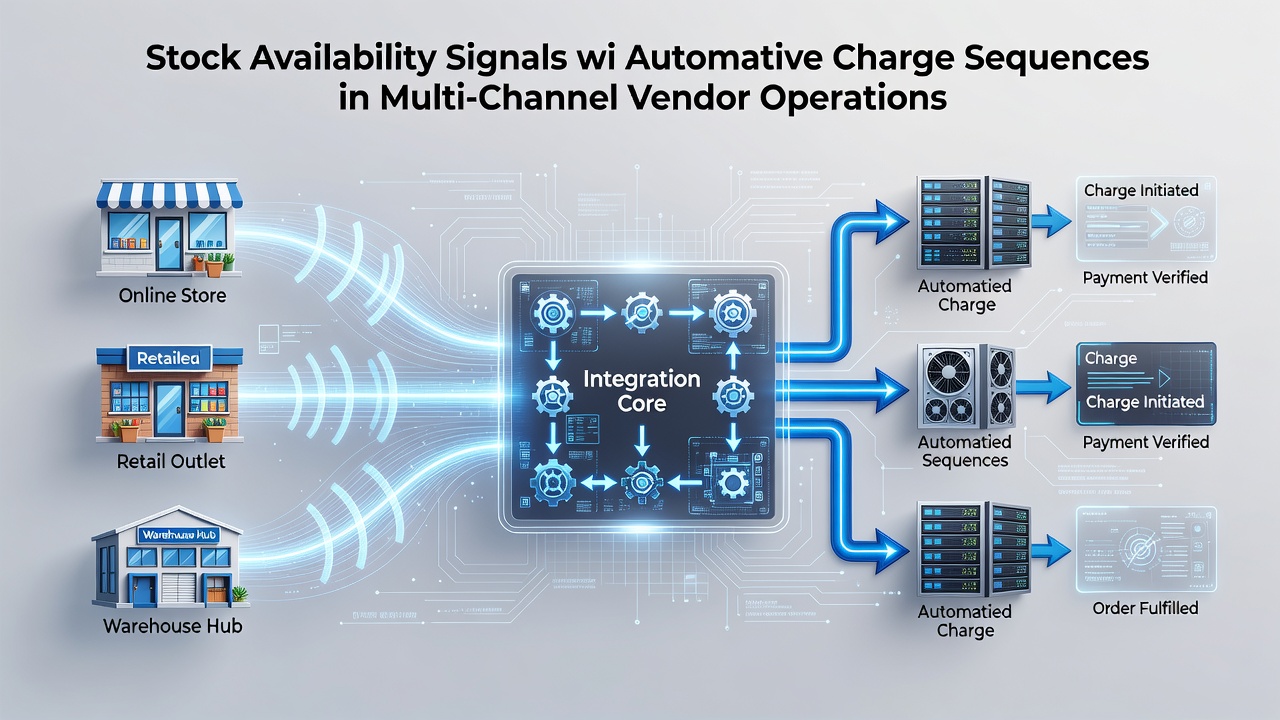
Stock availability signals now feed directly into payment authorization systems for vendors who operate across websites, physical stores, and third-party marketplaces, which allows charges to trigger only when inventory reaches confirmed levels rather than relying on pre-orders or manual checks. Systems pull live data from warehouse management platforms and point-of-sale terminals, then route that information through application programming interfaces to payment gateways so sequences activate automatically once stock thresholds are met. This setup reduces failed transactions that occur when items appear available online but sit out of stock at distribution centers.
Signal transmission across channels
Multi-channel vendors maintain separate inventory databases for each sales outlet yet route updates through centralized middleware that standardizes availability flags before they reach billing engines. A retail operator selling apparel through its own site, a marketplace storefront, and in-store kiosks can configure rules so that a low-stock alert from any location pauses new charge sequences until replenishment registers in the shared ledger. Data flows occur in near real time because vendors use event-driven architectures that publish changes the moment scanners update quantities or suppliers confirm shipments.
Observers note that integration often relies on standardized message formats such as JSON payloads carrying fields for SKU, quantity on hand, and expected restock dates, which payment processors then match against pending order queues. When stock drops below a preset buffer, the middleware withholds authorization requests and places charges in a hold state until fresh inventory appears, thereby avoiding overdraft situations for customers and chargeback exposure for merchants.
Automation of charge sequences
Once an availability signal clears, the system initiates a pre-authorized payment sequence that includes token validation, fraud scoring, and settlement instructions without further human input. Vendors configure these sequences to respect regional rules around recurring billing, so a European customer purchasing a subscription item receives confirmation only after the platform verifies both stock and compliance with local consumer protection timelines. Research from the Bank for International Settlements shows that automated linkages between inventory and payments cut processing delays by measurable margins in high-volume retail environments.
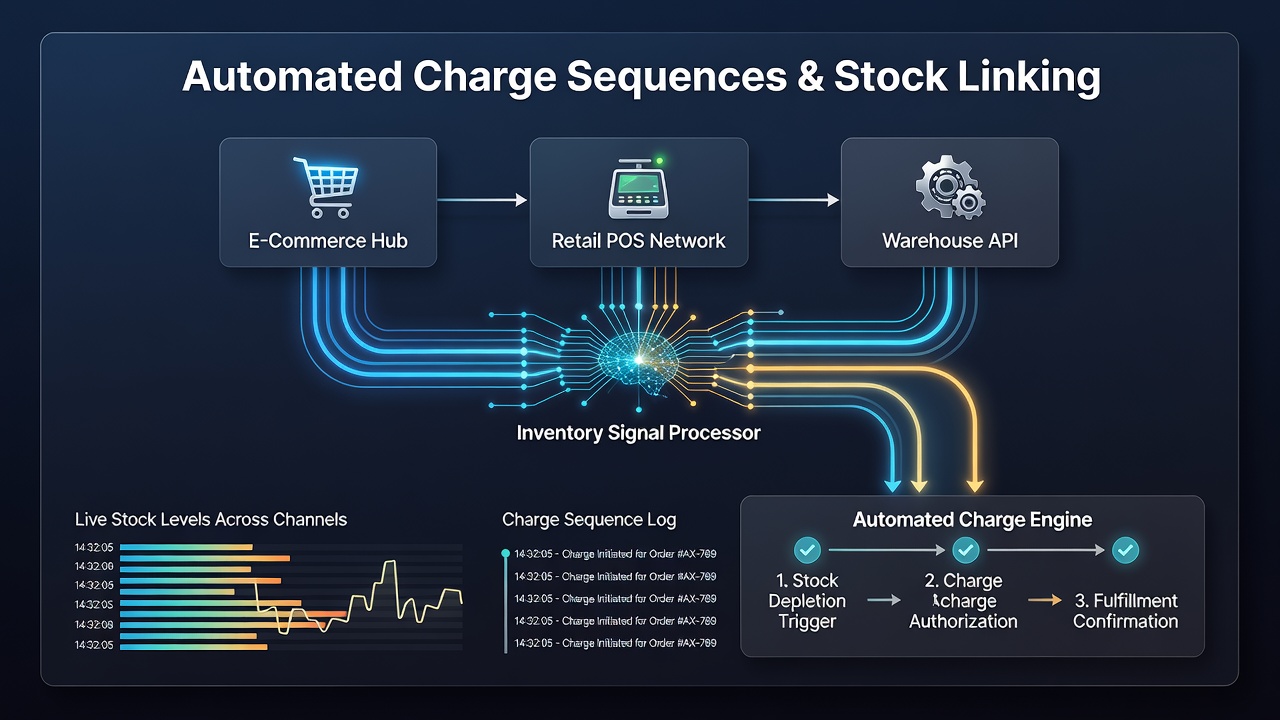
Payment gateways receive the green-light flag alongside order details and proceed to capture funds or schedule future captures according to the vendor's ruleset. In practice, this means a craft supplier who lists seasonal goods on multiple platforms can let the system release charges for backordered items the day new stock arrives at any warehouse, rather than waiting for staff to review spreadsheets. The same logic applies to service providers who bundle physical products with digital subscriptions, ensuring each component clears its availability check before the combined invoice processes.
Technical considerations in June 2026
By June 2026 vendors had adopted enhanced API versioning that supports conditional triggers based on both quantity and location-specific availability, which proves useful for operators spanning multiple time zones. Middleware platforms now incorporate fallback logic so that if one channel reports a temporary outage, the system queries secondary sources before deciding whether to proceed with a charge sequence. Those who've implemented these updates report smoother coordination between warehouse robots that scan shelves and the billing layers that finalize transactions.
Security protocols wrap each signal exchange with encryption and audit trails, satisfying requirements from bodies such as the Monetary Authority of Singapore for cross-border data movement. Vendors also map inventory events to specific authorization codes so that any later dispute can trace back to the exact stock update that permitted the charge, which simplifies reconciliation across channels that use different tax treatments or currency conversions.
Operational examples
One electronics distributor integrated its North American fulfillment centers with European marketplaces by routing stock signals through a single orchestration layer that pauses charges when regional shortages appear. The approach allowed the company to maintain separate pricing and tax rules per market while still linking every sale attempt to verified inventory counts. Similar patterns appear among food and beverage suppliers who must account for perishability, because their systems automatically defer charges on items whose shelf life would expire before delivery windows close.
Take the case of a vendor coordinating seasonal apparel across its website and pop-up locations where stock signals from RFID tags feed directly into the payment processor's decision engine, which then either releases or holds the sequence accordingly. Observers note that such linkages have become standard for any operator moving more than a few thousand units monthly because manual oversight cannot keep pace with simultaneous sales across channels.
Conclusion
Linking stock availability signals to automated charge sequences gives multi-channel vendors a mechanism to align inventory realities with payment execution across every sales outlet they maintain. The practice relies on standardized data exchanges, event-driven middleware, and rule-based triggers that respect both operational thresholds and regulatory frameworks. As platforms continue to refine these connections, the core requirement remains consistent: charges activate only after verified stock confirms that fulfillment can proceed without interruption.