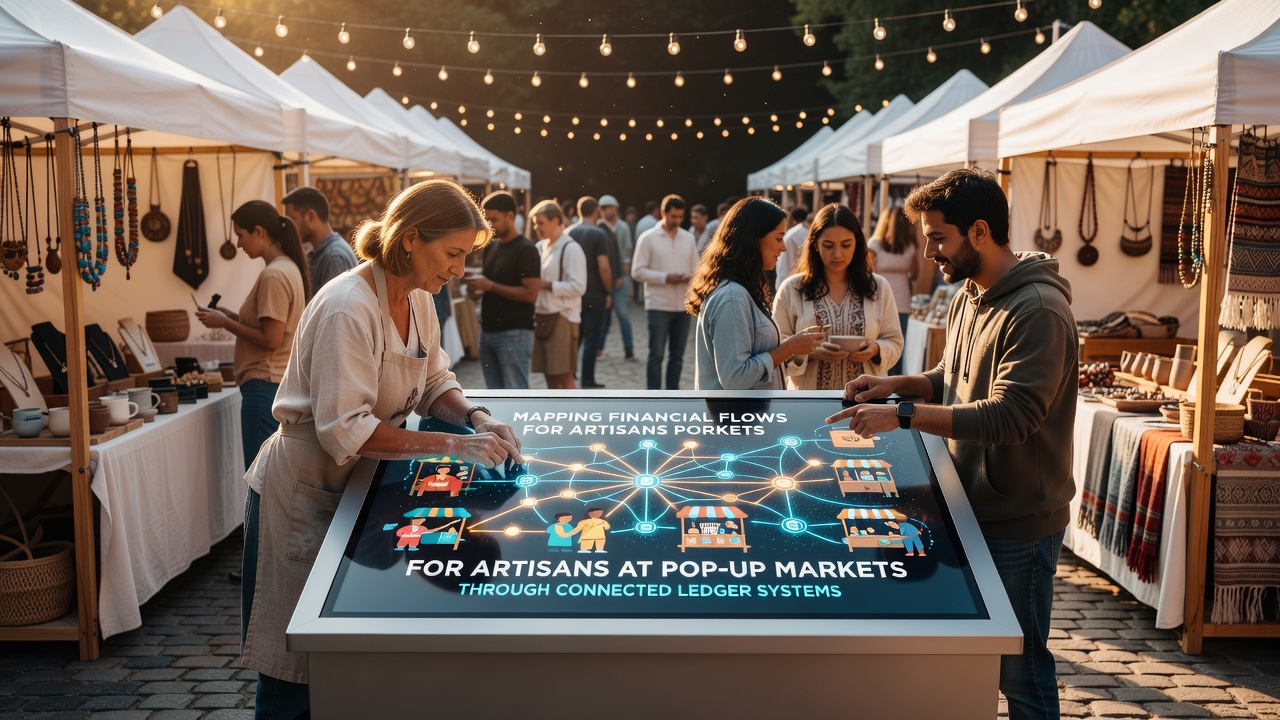
Mapping Financial Flows for Artisans at Pop-up Markets Through Connected Ledger Systems
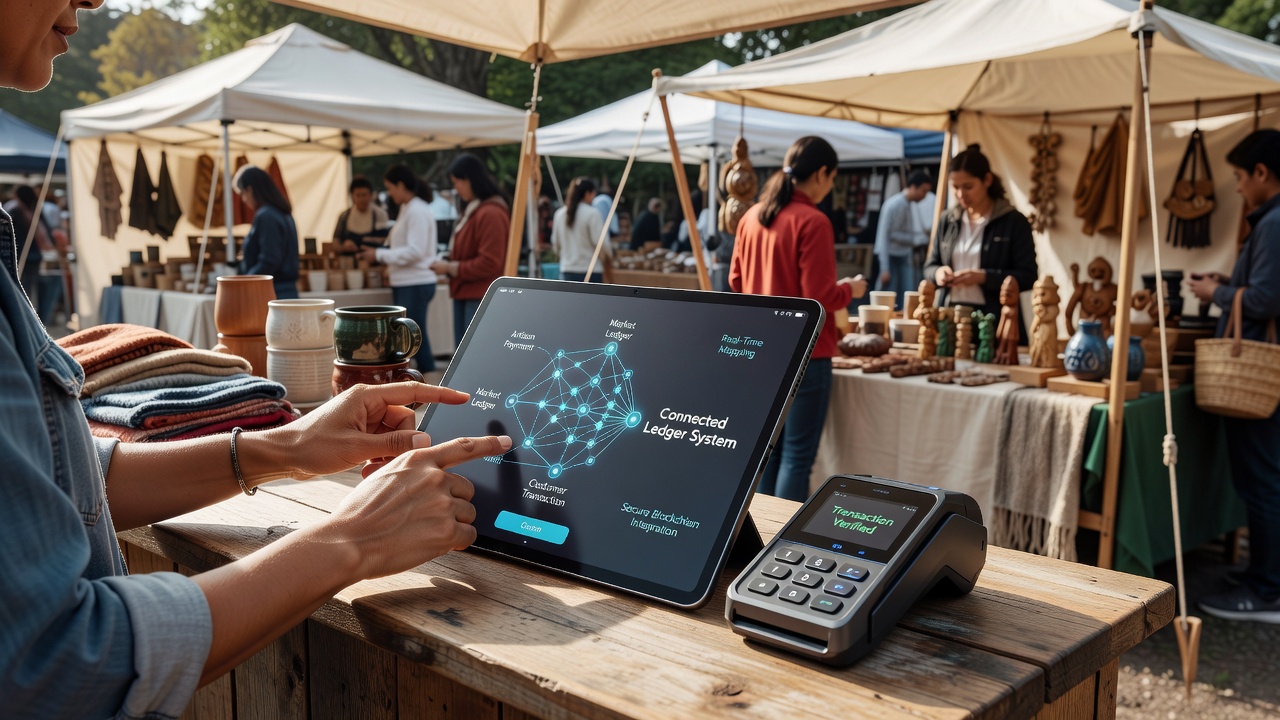
Pop-up markets bring together artisans who sell handmade goods in temporary locations, and these vendors face distinct challenges when tracking income from fluctuating daily sales alongside material costs and seasonal expenses. Connected ledger systems link multiple data sources such as point-of-sale devices, inventory trackers, and bank feeds into a single view that records each transaction as it occurs. Researchers at institutions studying small-scale commerce have noted that these systems allow artisans to see cash movements across different market events without relying on separate spreadsheets or manual logs.
How Connected Ledgers Operate in Temporary Market Settings
Artisans set up stalls at weekend fairs or seasonal events where sales volume can shift quickly based on weather, foot traffic, and local events. A connected ledger pulls information from mobile card readers and online order platforms, then timestamps each entry so that revenue appears alongside corresponding inventory deductions. Observers note that this real-time linkage reduces discrepancies that arise when vendors reconcile paper receipts days after a market closes.
By July 2026, several regional trade associations reported increased use of these ledgers among craft vendors operating across multiple cities. The systems often run on cloud platforms that synchronize data even when internet access at a site remains limited, storing entries locally until a connection resumes. This approach supports accurate mapping of funds as they move from customer payments through to supplier reorders and tax provisions.
Tracing Revenue Streams and Expense Patterns
Financial flows for artisans include cash from direct sales, card transactions, and sometimes pre-orders placed through social channels. Connected ledgers categorize these inflows while matching them against outflows such as booth fees, raw material purchases, and transportation costs. Data from market organizers in North America and Europe shows that vendors using integrated records complete monthly summaries faster than those maintaining separate records for each event.
Inventory and Payment Synchronization
Stock levels update automatically when an item sells at a stall, which prevents overselling across future markets. Payment confirmations feed into the same ledger so that pending transfers from processors appear alongside completed deposits. Those who have examined vendor workflows find that this synchronization helps artisans identify which product lines generate steady returns versus those that require price adjustments.
Supporting Compliance and Record Keeping
Tax authorities in various jurisdictions require detailed transaction histories, and connected ledgers generate reports that group sales by date, location, and payment type. According to figures released by Statistics Canada, small vendors who adopted digital record systems reduced time spent on year-end filings by measurable margins compared with previous manual methods. The same platforms can flag entries that fall under different tax categories, such as taxable goods versus exempt services.
Pop-up operators also use these records when applying for permits or seeking small business grants that request evidence of consistent revenue. European Commission reports on micro-enterprises highlight similar patterns where integrated ledgers provide the documentation needed for cross-border market participation without additional administrative layers.
Integration with Broader Market Ecosystems
Some market organizers now offer shared ledger access so that vendors receive aggregated insights about overall attendance and average transaction values while retaining control over their individual data. This arrangement connects artisan records to broader supply networks, allowing material suppliers to anticipate demand spikes based on collective sales trends across multiple events. Those studying supply chain dynamics observe that such connections reduce stock shortages during peak seasons.
Security features within these systems encrypt transaction details during transmission between devices and central servers. Vendors retain access through multi-factor authentication, and audit trails record every change to an entry. Research from academic groups focused on digital commerce indicates that these measures align with emerging standards for small-scale financial data protection.
Conclusion
Connected ledger systems provide artisans at pop-up markets with a structured method for following money as it enters and leaves their operations. The approach combines sales data, inventory updates, and expense tracking into unified records that support both daily decisions and longer-term reporting needs. As adoption continues through 2026 and beyond, these tools remain tied to the practical requirements of temporary retail environments where flexibility and accuracy matter equally.