The Interplay of Regulatory Frameworks and Clearing Mechanisms in Cross-Regional Trade Settlements
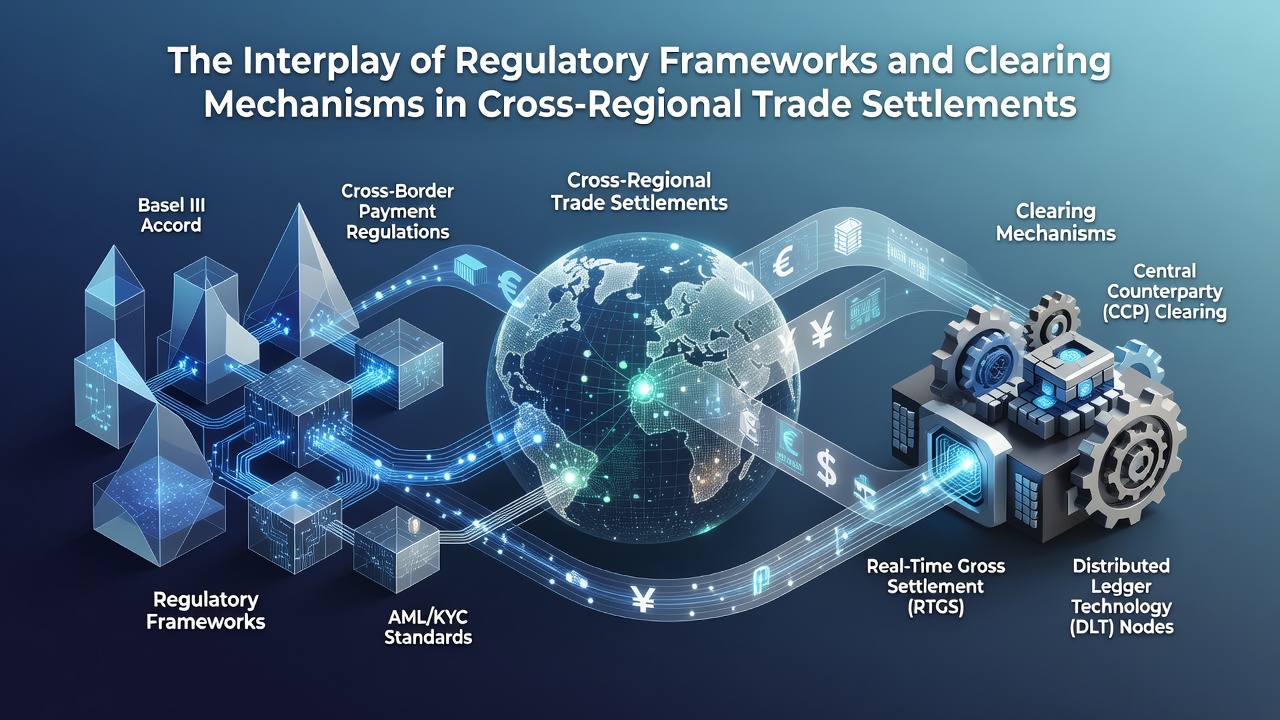
Cross-regional trade settlements depend on coordinated systems that move value between parties separated by borders, currencies, and legal jurisdictions, and regulatory frameworks shape how those systems operate at every stage. Clearing mechanisms handle the exchange of payment instructions and the netting of obligations, while rules from multiple authorities determine which transactions can proceed and under what conditions. Observers note that this relationship has grown tighter as trade volumes expand and as authorities respond to risks exposed during earlier market disruptions.
Core Elements of Regulatory Frameworks
Authorities in different regions impose requirements on capital adequacy, reporting, and participant eligibility that directly affect clearing operations. In the United States the Securities and Exchange Commission and the Commodity Futures Trading Commission set standards for central counterparties that clear securities and derivatives trades, while the Federal Reserve oversees large-value payment systems. European authorities apply the Central Securities Depositories Regulation and the European Market Infrastructure Regulation to similar entities, and these rules require specific risk-management procedures before a clearing house can accept trades from counterparties in other jurisdictions. Research from the Bank for International Settlements shows that alignment between these rule sets reduces the frequency of settlement fails, although gaps remain when one region updates its standards ahead of others.
Mechanics of Clearing Systems
Clearing systems net obligations between participants and manage the timing of final settlement, often through central counterparties that become the buyer to every seller and the seller to every buyer. Systems such as CLS for foreign exchange and TARGET2 for euro-denominated payments illustrate how multilateral netting lowers the total value that must move at the end of each day. When a trade crosses regions, the clearing mechanism must accommodate differing operating hours, currency conversion rules, and collateral eligibility standards set by each participating authority. Data from the Continuous Linked Settlement system indicate that more than 95 percent of eligible foreign-exchange trades were settled through its platform in the first half of 2026, reflecting steady adoption across participating currencies.
Interaction Points Between Rules and Clearing Processes
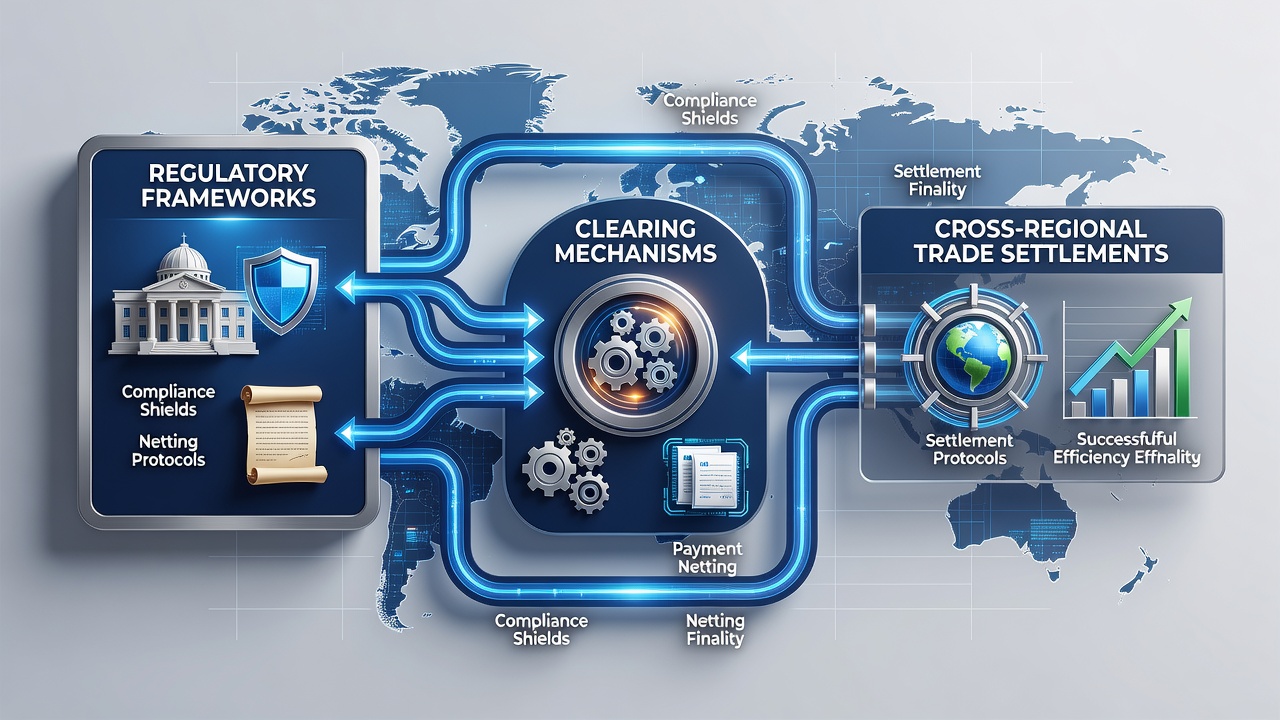
Regulatory changes often require immediate adjustments inside clearing engines. When a new capital requirement takes effect, clearing houses recalculate margin models and may alter the collateral they accept from participants in other regions. Conversely, operational constraints inside a clearing system can prompt regulators to issue guidance on acceptable settlement timelines or on the treatment of failed trades. In July 2026 several Asia-Pacific authorities coordinated with European and North American counterparts to test extended operating hours for cross-currency netting, an exercise that highlighted how synchronized rule changes can reduce daylight overdraft exposures. Those who've studied the test results report that the exercise produced measurable declines in intraday liquidity needs for the largest participants.
One study released by a consortium of central banks examined how differing bankruptcy regimes affect the portability of positions when a clearing participant defaults. The analysis found that jurisdictions with compatible close-out netting statutes experienced faster position transfers and lower replacement costs. Observers note that these findings have encouraged additional memoranda of understanding between supervisory bodies in North America and the European Union.
Regional Examples and Coordination Efforts
Trade between Canadian and Mexican firms frequently routes through U.S. dollar clearing channels, subjecting the transactions to rules from three separate authorities. The Bank of Canada, Banco de México, and the Federal Reserve maintain standing arrangements that permit information sharing on participant solvency and on emerging operational risks. Similar arrangements exist between the Monetary Authority of Singapore and the Reserve Bank of Australia, where regulators have aligned reporting templates so that clearing houses can submit a single set of data rather than duplicating filings. Figures released by the Bank for International Settlements reveal that such harmonized reporting cut administrative costs for regional banks by an average of 18 percent between 2023 and 2025.
Academic researchers at the University of Tokyo have modeled the impact of asynchronous regulatory updates on settlement liquidity. Their simulations show that a six-month lag between the introduction of a new margin rule in one region and its recognition in another can increase peak liquidity demand by as much as 12 percent for cross-border trades. The study recommends joint review calendars among major authorities to narrow these timing gaps.
Conclusion
The relationship between regulatory frameworks and clearing mechanisms continues to evolve as authorities refine capital rules, risk-management standards, and cross-border information-sharing protocols. Evidence from ongoing coordination initiatives demonstrates that synchronized updates produce lower settlement fails and more predictable liquidity needs, while divergent timelines create measurable frictions. As trade volumes grow and new asset classes enter clearing pipelines, the alignment of these two domains remains central to efficient cross-regional settlements.