Tracing Electronic Funds Through Wholesale Distribution Networks
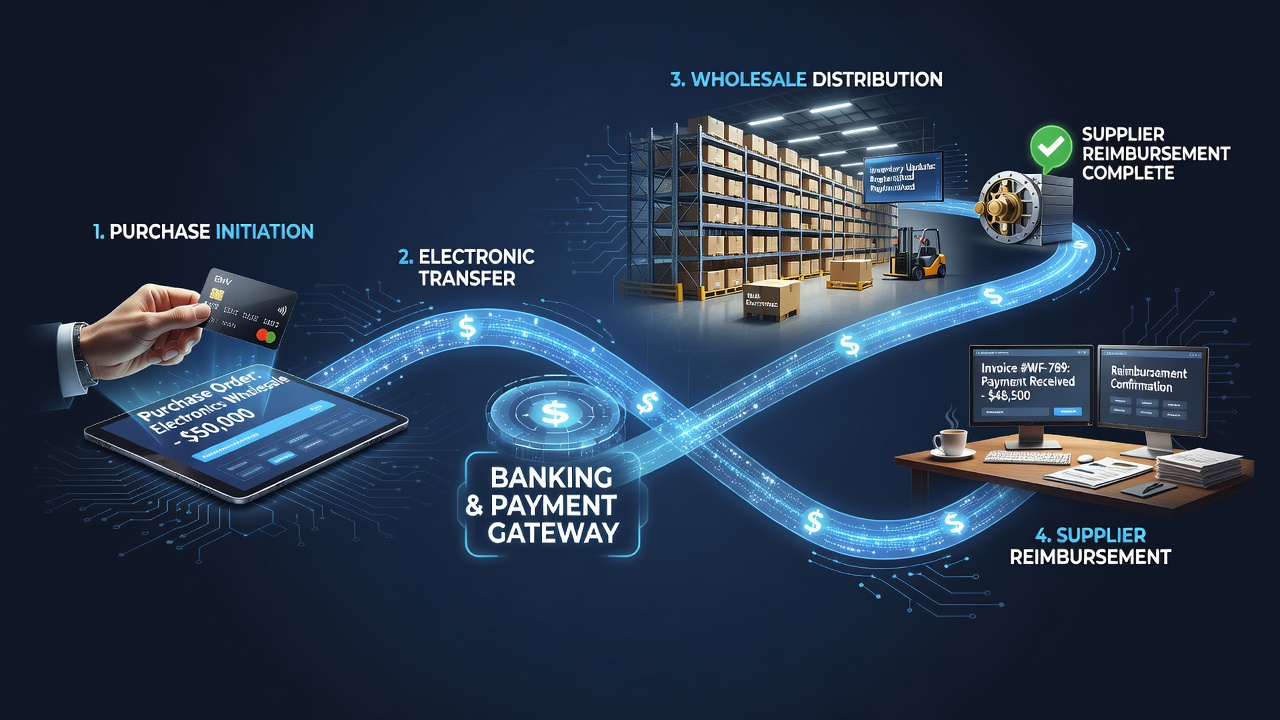
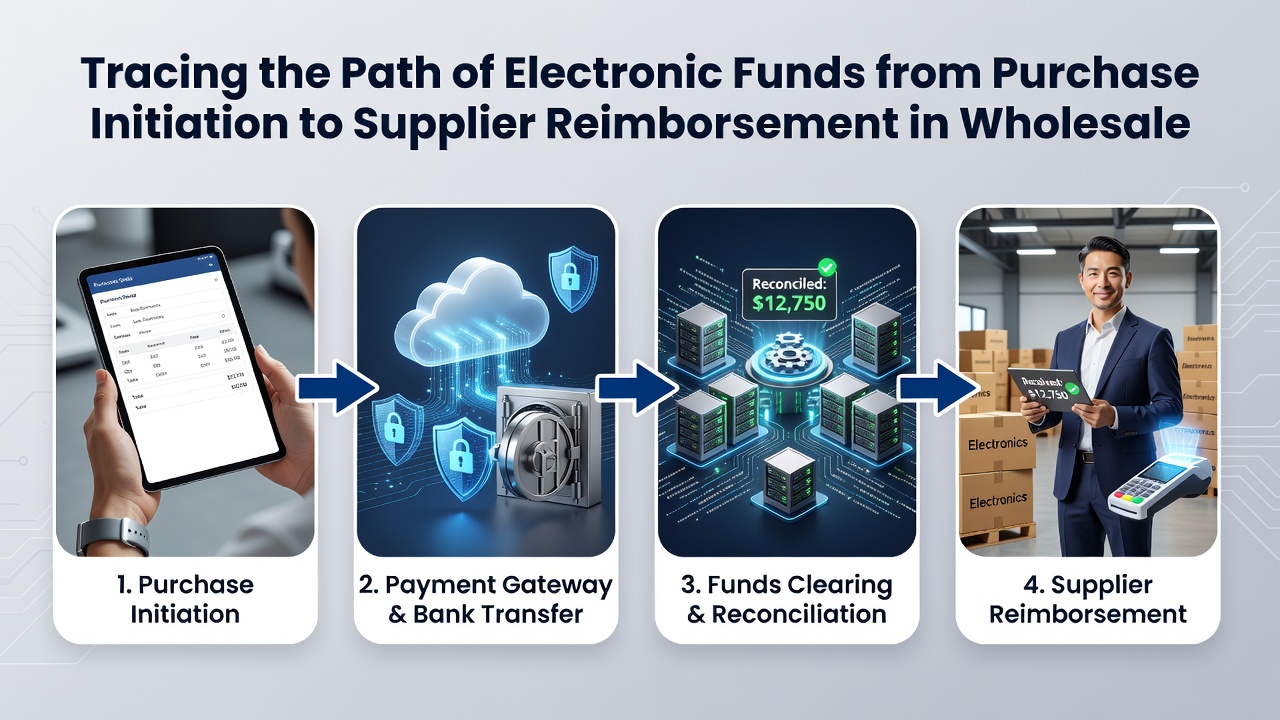
Electronic payments in wholesale distribution follow a structured sequence that begins when a buyer submits an order and ends with the supplier receiving cleared funds, often spanning multiple intermediaries, banks, and settlement systems that handle authorization, clearing, and final transfer. The process relies on standardized protocols such as ACH transfers, wire instructions, and card networks that move value without physical currency while maintaining audit trails at each stage.
Purchase Initiation and Payment Trigger
Wholesale buyers typically start the cycle by issuing a purchase order through an ERP platform or supplier portal, after which the payment instruction is generated either as a batch file or real-time API call that specifies amount, account details, and remittance data. This initial trigger travels from the buyer’s treasury system to its originating bank, where basic validation checks for available credit or sufficient ledger balance occur before the message proceeds further.
Once the originating bank accepts the instruction, it packages the transaction into an electronic format compatible with the chosen rail, whether that is the Federal Reserve’s Fedwire for high-value domestic moves or SWIFT messaging for cross-border wholesale flows. Observers note that data fields carrying invoice references travel alongside the payment so the supplier can match incoming funds to specific shipments without manual reconciliation later.
Authorization, Clearing, and Risk Checks
Authorization occurs when the receiving bank or network operator verifies that the payer’s account can support the debit and that no fraud indicators or sanctions flags are present. In many wholesale environments this step runs through automated screening engines that cross-reference transaction patterns against historical volumes and known counterparty lists, a process that usually completes within seconds for domestic ACH items and minutes for wires.
Clearing follows authorization and involves the exchange of payment messages between the payer’s bank and the payee’s bank through a central utility or correspondent arrangement. The National Automated Clearing House Association reports that same-day ACH volumes have grown steadily, allowing wholesale participants to move funds on a T+0 basis rather than waiting for next-day settlement. This acceleration matters because inventory turns in distribution chains often depend on predictable cash arrival to fund the next replenishment cycle.
Settlement and Final Reimbursement
Settlement represents the irrevocable transfer of central-bank or commercial-bank reserves that completes the payment obligation. When the payee’s bank receives the settled funds, it credits the supplier’s account and makes the value available for withdrawal or further disbursement, often within the same business day for domestic transactions processed before cutoff times. Cross-border wholesale settlements may require additional correspondent steps, extending the timeline to T+1 or T+2 depending on time zones and currency pairs.
Suppliers then apply the incoming credit against open receivables, update inventory systems to reflect paid status, and release goods if the order had been held pending confirmation. Data from the Bank for International Settlements shows that wholesale payment values dwarf retail volumes, making even small percentage improvements in settlement speed meaningful for working-capital management across entire distribution tiers.
Multi-Party Visibility and Exception Handling
Complex wholesale chains frequently involve distributors, sub-distributors, and logistics providers, each maintaining separate ledger entries that must reconcile against the original payment trail. Platforms that embed remittance information in ISO 20022 messages allow every participant to see the same reference data, reducing mismatches that once required manual investigation. When discrepancies arise, such as partial shipments or pricing adjustments, exception workflows route the item to operations teams who issue reversal instructions or supplemental payments through the same electronic rails.
June 2026 marks the point at which several major wholesale networks completed migration to ISO 20022 messaging standards, adding richer structured data that supports automated reconciliation and regulatory reporting without additional file formats. Those networks now transmit purpose codes and invoice line details natively, shortening the interval between supplier receipt and internal posting.
Conclusion
The path from purchase initiation to supplier reimbursement in wholesale distribution therefore consists of sequential, rule-bound stages that move electronic value while preserving traceability across banks, networks, and enterprise systems. Each step, from order-triggered payment creation through authorization, clearing, settlement, and final credit, operates under defined timelines and data standards that allow participants to forecast cash arrival and manage inventory with greater precision. As messaging standards continue to evolve, the same underlying sequence accommodates higher volumes and richer information without altering the fundamental flow of funds.